Credit Score & Mortgage Approval in Ontario (2026 Guide)
Learn how your credit score affects mortgage approval in Ontario. Minimum scores, lender requirements, tips to improve credit, and expert advice from an Ontario mortgage agent.
Introduction: Why Your Credit Score Matters More Than You Think
If you’re planning to buy a home or refinance in Ontario, your credit score can make or break your mortgage approval. Many buyers focus only on interest rates, but lenders look at your credit score first to decide if you qualify, which lender you qualify with, and how much interest you’ll pay.
The good news?
You don’t need a perfect credit score to get approved. You just need the right strategy and the right mortgage agent.
This guide explains everything Ontario home buyers need to know about credit score and mortgage approval in 2025.
What Is a Credit Score in Canada?
A credit score is a three-digit number that reflects how responsibly you manage debt. In Canada, credit scores typically range from 300 to 900.
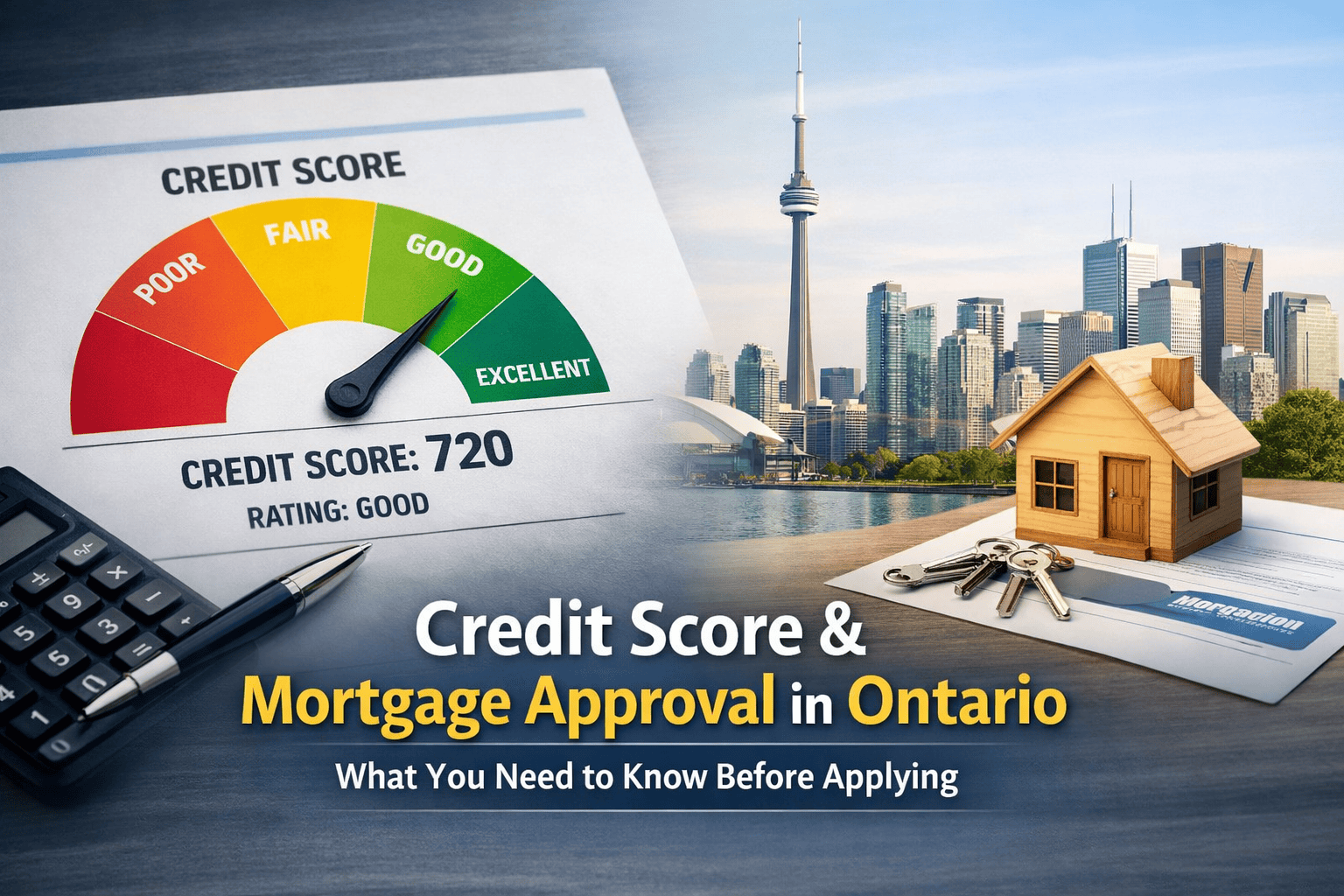
Credit Score Ranges Explained
760 – 900 → Excellent
725 – 759 → Very Good
660 – 724 → Good
600 – 659 → Fair
Below 600 → Poor
Lenders in Ontario mainly use data from Equifax Canada and TransUnion Canada.
Minimum Credit Score for Mortgage Approval in Ontario
This is the most common question I get as a mortgage agent.
Credit Score Requirements by Lender Type
A Lenders (Banks & Prime Lenders)
Minimum credit score: 680
Best interest rates
Strict income and debt verification
Stress test applies
B Lenders (Alternative Lenders)
Minimum credit score: 600
Higher interest rates
Flexible income rules
Ideal for self-employed borrowers
Private Lenders
Credit score: Less important
Focus on property equity
Short-term solution
Higher interest and fees
💡 Many Ontario buyers are declined by banks but approved easily through alternative lenders with a solid plan.
How Credit Score Affects Your Mortgage Interest Rate
Your credit score doesn’t just decide approval — it directly impacts your monthly payment.
Example:
Credit score 750+ → Lower interest rate
Credit score 650–679 → Higher interest rate
Credit score below 620 → Limited lender options
Over a 25-year mortgage, even a 0.50% difference can cost or save tens of thousands of dollars.
What Lenders Look at Beyond Credit Score
A strong credit score helps, but lenders in Ontario assess your entire financial profile:
Payment history (most important factor)
Credit utilization ratio
Length of credit history
Types of credit (credit cards, loans, LOC)
Recent credit inquiries
Debt-to-income ratios (GDS/TDS)
Employment stability
Down payment source
Common Credit Mistakes That Hurt Mortgage Approval
Avoid these mistakes at least 6–12 months before applying:
Missing or late payments
Maxing out credit cards
Closing old credit accounts
Applying for multiple loans
Ignoring collection accounts
Cosigning loans without planning
How to Improve Your Credit Score Before Applying for a Mortgage
If your credit score isn’t ideal, don’t worry. Here are proven steps that work for Ontario borrowers:
Practical Credit Improvement Tips
Pay all bills on time (even minimum payments)
Keep credit utilization below 30%
Do not close old credit cards
Limit new credit applications
Pay down high-interest debt first
Check credit reports for errors
Use a secured credit card if needed
⏳ Most borrowers see improvement within 3–6 months with proper guidance.
First-Time Home Buyers: Credit Score Tips in Ontario
If you’re a first-time buyer:
Aim for 680+ credit score
Keep your finances stable before application
Avoid job changes during approval
Save proof of rent payments
Use government incentives wisely
👉 You may also qualify for:
First-Time Home Buyer Incentive
Land Transfer Tax Rebates
RRSP Home Buyers’ Plan
Self-Employed Borrowers & Credit Score Challenges
Self-employed clients often face:
Lower reported income
Business write-offs
Inconsistent cash flow
Good credit can offset income challenges, especially with:
Stated-income programs
B-lender solutions
Strong down payment
FAQs: Credit Score & Mortgage Approval in Ontario
Q: Can I get a mortgage with a 620 credit score?
Yes, with alternative lenders or private options.
Q: Do joint applications use both credit scores?
Yes. Lenders typically consider the lower score.
Q: Does checking my credit score hurt it?
No. Soft checks do not impact your score.
Q: Should I pay off all debt before applying?
Not always. Strategy matters more than zero debt.
Why Work With an Ontario Mortgage Agent?
Unlike banks, a mortgage agent:
Accesses 40+ lenders
Matches you with the right lender for your credit
Builds a credit-improvement roadmap
Saves time, money, and stress
A decline from a bank does not mean a decline overall.
Final Thoughts: Your Credit Score Is Not the End of the Story
Your credit score is important — but it’s not the final decision maker. With proper planning, even borrowers with average or bruised credit can successfully buy or refinance a home in Ontario.
The key is expert advice before you apply, not after a rejection.